
Geography Lab Manual
Geography is a hands-on subject that requires practical work and exploration. A well-equipped geography laboratory provides the perfect environment for students to engage with the subject and develop essential skills. By participating in activities like map-making, surveying, and remote sensing, students gain a deeper understanding of geographical concepts.
A geography laboratory plays a crucial role in enriching students' geographical knowledge and exposing them to various subfields including physical, human, and nature-society geography. It stimulates imagination, inspires learning, and provides a conducive atmosphere for proper study. Without a separate geography room, it becomes difficult to collect and store maps, globes, charts, and other essential tools.
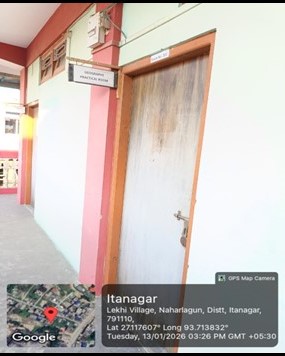
Establishment of New Geography Laboratory at Arunodaya University (AU)
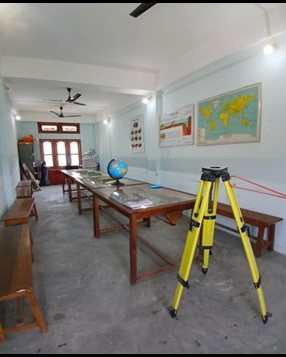
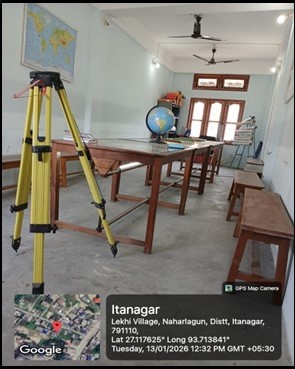
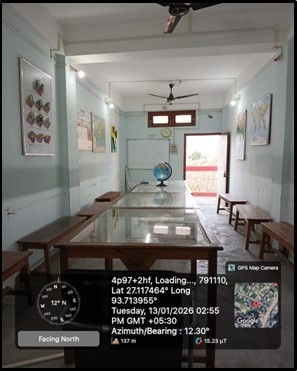
The Department of Geography at Arunodaya University (AU) is establishing a new laboratory to enhance the teaching-learning experience for UG and PG students. The existing lab is equipped with 2 computers and software like Visual Studio Code, XAMPP Server, MySQL Server, ArcGIS, Google Chrome, Adobe Reader, Microsoft Office, and Python IDE.
| Purpose | Instruments |
|---|---|
| Surveying | Dumpy Level, Prismatic Compass, Theodolite and Measuring Tape. |
| Identification | Maps, Globe and Three-Dimensional Models. |
| Measurements | Rotometer. |
| GIS | GPS, Stereoscope (Mirror & Pocket), RS & GIS Software. |
| Others | Aerial photos, Computer and Overhead Projector. |
Establishing a well-equipped laboratory for Geography is crucial for effective teaching and better student performance. Practical work in the geography garden and laboratory should be a significant part of continuous assessment, making it easier for examination bodies to evaluate student progress.
A well-equipped laboratory enables students to:
- Translate theoretical knowledge into practical experience.
- Develop hands-on skills in geography.
- Enhance understanding of local geography.
- Apply geographical concepts to real-life situations.
The Department of Geography is working to develop the laboratory with more scientific instruments, aligning with the syllabi. This practical approach makes geographical information more meaningful and relevant to students' daily experiences, leading to a lasting impact on learning.
➤ Do’s:
- Conduct yourself responsibly.
- Follow good housekeeping practices.
- Read and follow written and verbal instructions carefully.
- Use equipment as directed by the teacher.
- Report any equipment failure or breakdown to the teacher.
- Work with caution when conducting surveys or using instruments/computers.
- Only work in the lab with the teacher present.
➤ Don’ts:
- Touch equipment or materials without instruction.
- Talk aloud or distract others.
- Eat, drink, or chew gum in the lab.
- Use lab glassware for food or beverages.
- Smoke in the lab area.
- Open irrelevant internet sites or use flash drives on lab computers.
- Upload, delete, or alter software on lab computers.
- Wander around or interfere with others' experiments.
| Sr. No | Particular | Qty |
|---|---|---|
| 1 | Dumpy Level All Set | 1 |
| 2 | GPS Handheld Etrex-10 | 1 |
| 3 | Plane Table ISI Complete Set with Metal Stand | 1 |
| 4 | Aerial Photograph Coloured | 1 |
| 5 | Courier Charges | 1 |
| 6 | Globe Big | 1 |
| 7 | Mirror Stereoscope | 1 |
| 8 | Pocket Stereoscope | 1 |
| 9 | Satellite Image Coloured | 1 |
| 10 | Toposheet NE | 1 |
| 11 | Ranging Rod 2-meter 2-Fold Metallic | 2 |